Rosie The Riveter Tools Of The Trade
AP It's an iconic image of solidarity during WWII that has become an enduring symbol of female empowerment. Retete culinare de post. Now, The New York Times reports the woman who inspired the 'Rosie the Riveter' poster, a California waitress named Naomi Parker Fraley, has died.
Application by iPure Infotech Services Pvt. Download free accident reconstruction software.
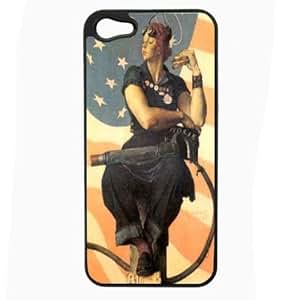
ROSIE THE RIVETER Trademark Information. Spiller, Paul. Selection of tools, namely, hammer, razor knife, keyhole saw, screwdriver, needle nose pliers, adjustable wrench, slip joint pliers, and scratch awl ergonomically designed and sized for women. The woman believed to be the 'real' Rosie the Riveter died Saturday at age 96, according to her daughter-in-law Marnie Blankenship. People dressed as Rosie the Riveter do the wave during a gathering to break the world record for the most people dressed as Rosie the Riveter at the Eastern Michigan University Convocation Center on Oct.
With a high-level of audio quality, durability, and dependability, the RDX Series will keep your workplace running smoothly, no matter if it’s in a school setting, construction zone, or retail store. Motorola offers a powerful tool for your business in its RDX Series of on-site two-way business radios. Affordable and easy-to-use, these radios enhance employee efficiency and overall profitability with their outstanding performance. Discover what many already know – Motorola’s RDX series gets the job done. Motorola mt 777 programming software.
Fraley passed away on Saturday at 96 in Longview, Wash., her daughter-in-law, Marnie Blankenship told The Times. Local television station KATU also reported on her death. The 'real' Rosie behind J.
Howard Miller's iconic wartime poster, commissioned by the Westinghouse Company's War Production Coordinating Committee, was only recently discovered. It's believed Miller based the 'We Can Do It' poster on a 1942 newspaper photograph of a female war worker. For decades, a Michigan woman named Geraldine Hoff Doyle had been identified as the inspiration for Rosie.
Rosie the Riveter WWII Home Front National Historical Park Games and Toys for Girls and Boys. When most people think of American women during World War II, the iconic ‘Rosie the Riveter’ comes to mind. Rosie was the modern factory girl – a woman who could effortlessly bridge the gap between masculine and feminine. The war industry during WWII gave women the opportunity to earn their own living and contribute to the war effort.
Doyle believed she resembled the young woman in the work clothes and polka dot bandana, and the media bolstered her story. But in 2016 Seton Hall University Professor James Kimble published an article in the journal Rhetoric & Public Affairs, 'Rosie’s Secret Identity,' which debunked Doyle’s claim and identified Fraley as the real Rosie. 'The women of this country these days need some icons,' Fraley told People magazine in a 2016 interview. 'If they think I’m one, I’m happy.' It was the historical correction Fraley had hoped for. Fraley and her sister Ada Wyn, part of a massive influx of women into the U.S. Workforce during WWII, went to work at a Naval Air Station in Alameda, Calif., after the Japanese attack on Pearl Harbor, according to the Times.
Fraley had seen the Miller poster and thought it looked like her. But it wasn't until she and her sister attended a 2011 reunion of female war workers in Richmond, Calif., that she knew the American legend was wrong. At the event, Fraley saw the newspaper photo of the women at the lathe that the Rosie poster is believed to be based on, incorrectly identifying Doyle as the woman in the photo.
“I couldn’t believe it,” Fraley told The Oakland Tribune in 2016. “I knew it was actually me in the photo.” Kimble, in his search for the woman behind Rosie, finally secured a copy of the image from a vintage-photo dealer. The original caption had the date and location — March 24, 1942, in Alameda — with this line: 'Pretty Naomi Parker looks like she might catch her nose in the turret lathe she is operating.' Fraley's son, Joe Blankenship, said he's glad his mother finally received the recognition she deserves, but to him, she's always going to be 'mom.' 'I grew up with this woman, so she was special to me because of who she was,” he said. After Kimble finally set the record straight, the Omaha World Herald asked Fraley how she felt now that she had been correctly identified.